Our day started with a 30-mile bus
ride through the Zigana Mountains past the
noisy Değirmen Creek gurgling its way to the Black
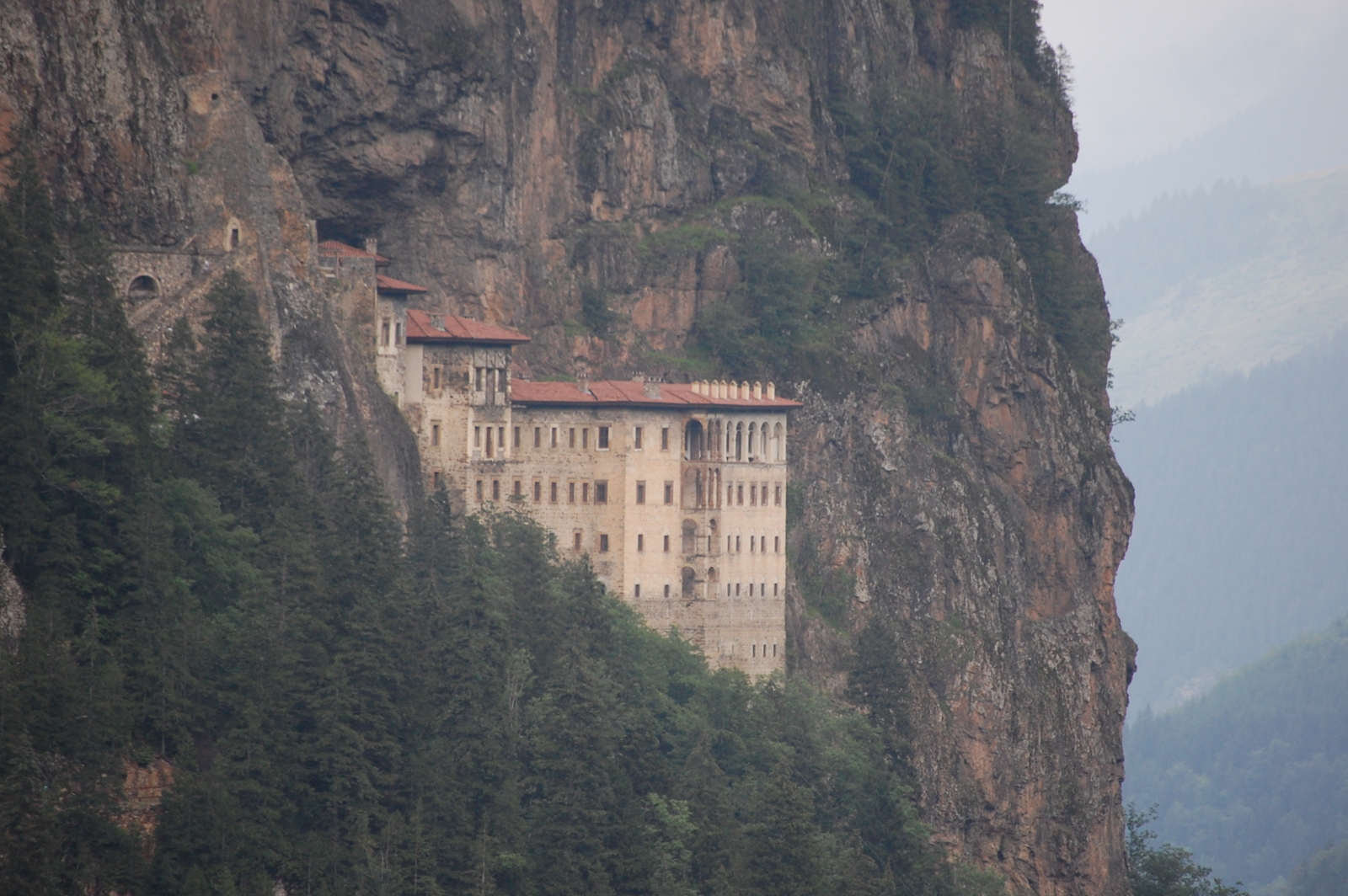
Sea.After switching to smaller vans, we approached the
winding and slippery path to the Sumela Monastery, now a
museum whose walls are its pictures.
Founded in 386 AD, the Sumela Monastery grew to its
current footprint
 in the 13th century when the Emperor of
Trebizond began to support it and several other
monasteries. Sometimes called "the Last Greek Empire,"
Trebizond was more of a juggling act than an empire; its
kings would marry their beautiful daughters to Anatolian
princes, making hostile neighbors into friendly family.
Often the empire would vie with Venetians and Genoans for
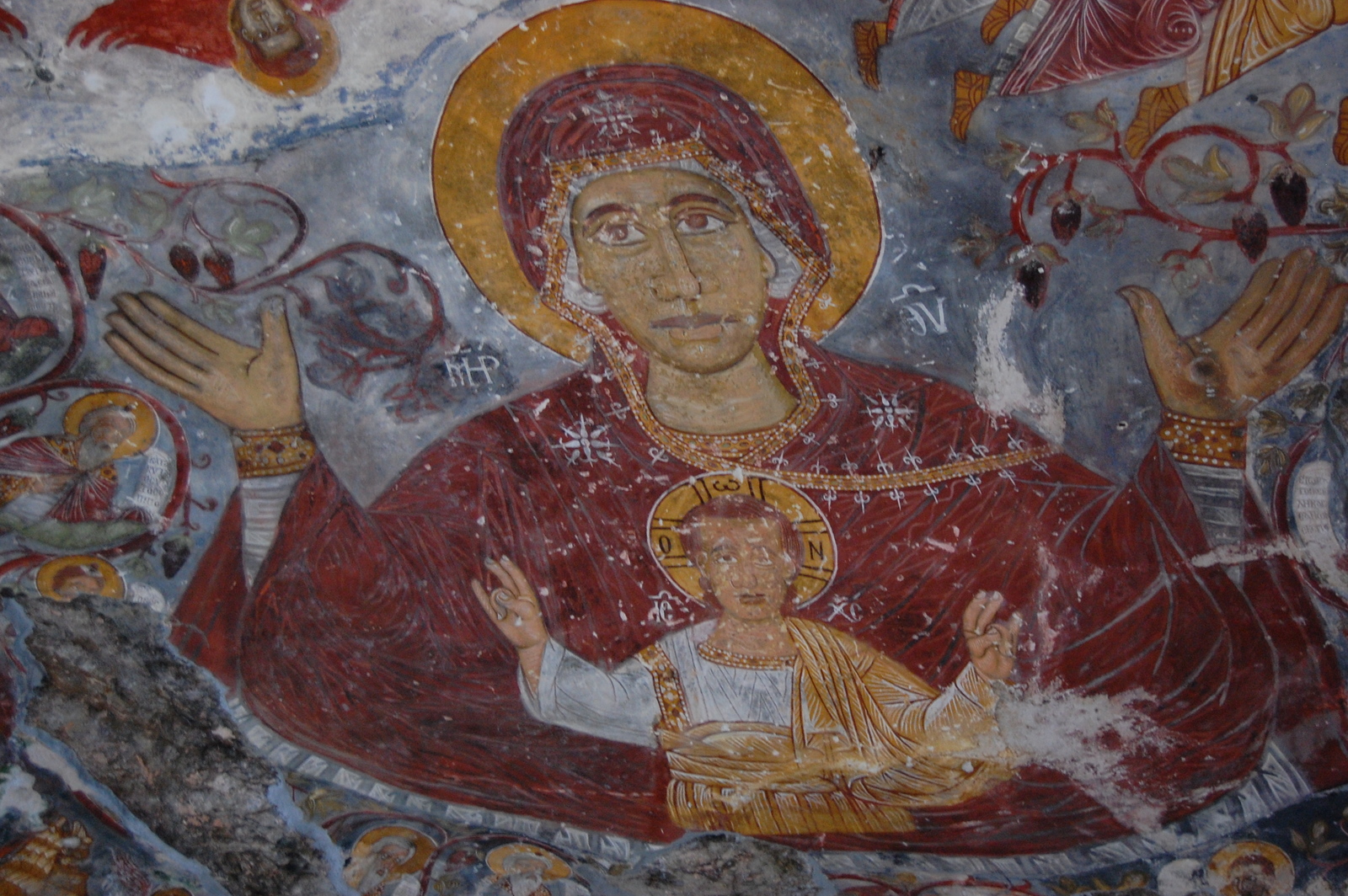
hegemony in its own cities. You never know when a monastery
or two will keep the Divine on your side, especially
one with Obama and Biden dressed as Madonna and
Child.
in the 13th century when the Emperor of
Trebizond began to support it and several other
monasteries. Sometimes called "the Last Greek Empire,"
Trebizond was more of a juggling act than an empire; its
kings would marry their beautiful daughters to Anatolian
princes, making hostile neighbors into friendly family.
Often the empire would vie with Venetians and Genoans for
hegemony in its own cities. You never know when a monastery
or two will keep the Divine on your side, especially
one with Obama and Biden dressed as Madonna and
Child.
But this wasn’t enough and eventually the Ottomans took over and beheaded the emperor and all of his sons. (Apparently they didn't sufficiently greet them as liberators.) But in typically tolerant fashion (at least to subjects), the Sultans allowed the monastery to exist; it remained a popular religious attraction until the 19th century. Like much of the Pontic Greek institutions, this monastery clung to both its wealth and its cliff. Its library was renowned.
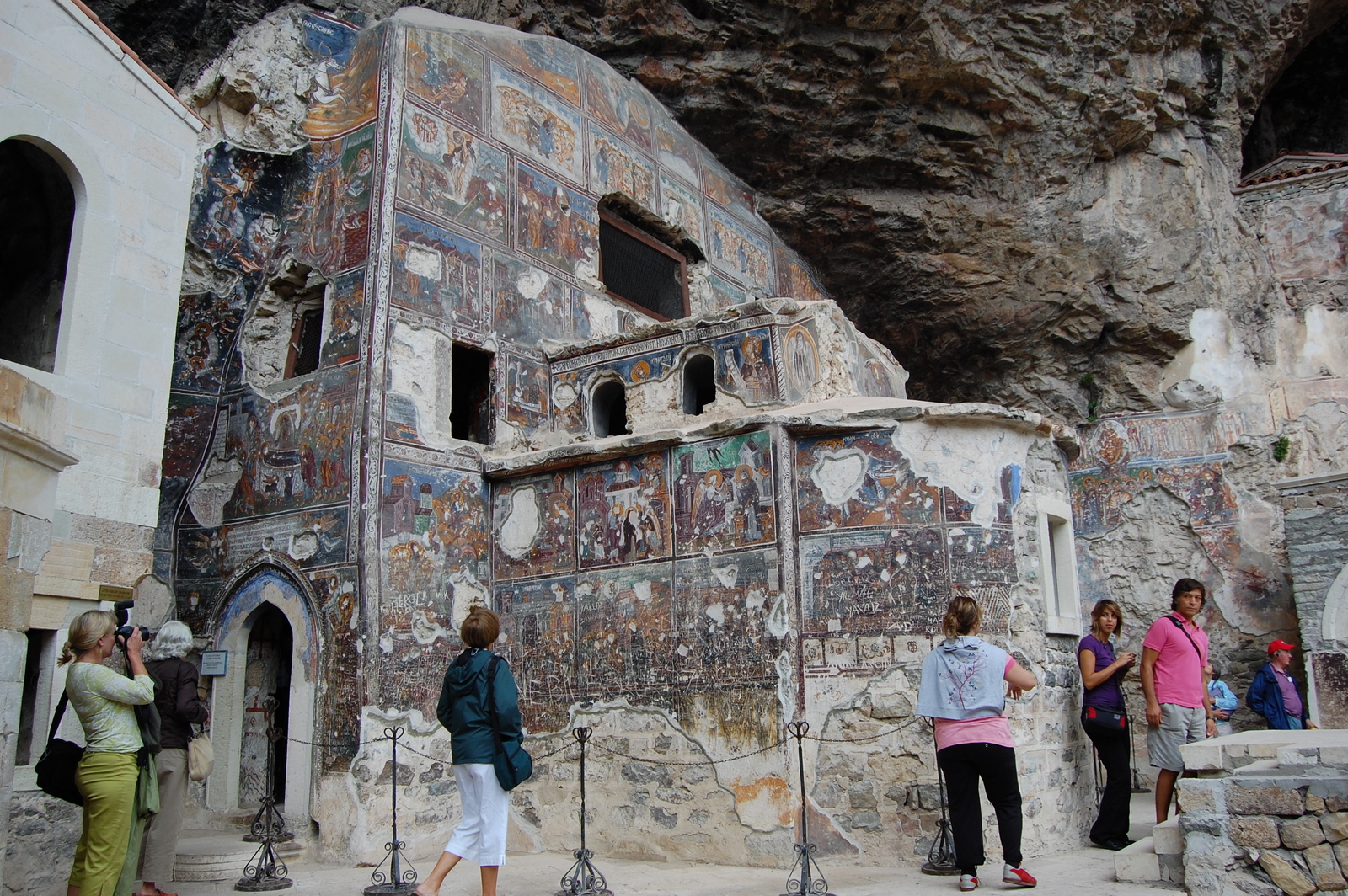 Sumela: caves made into chapels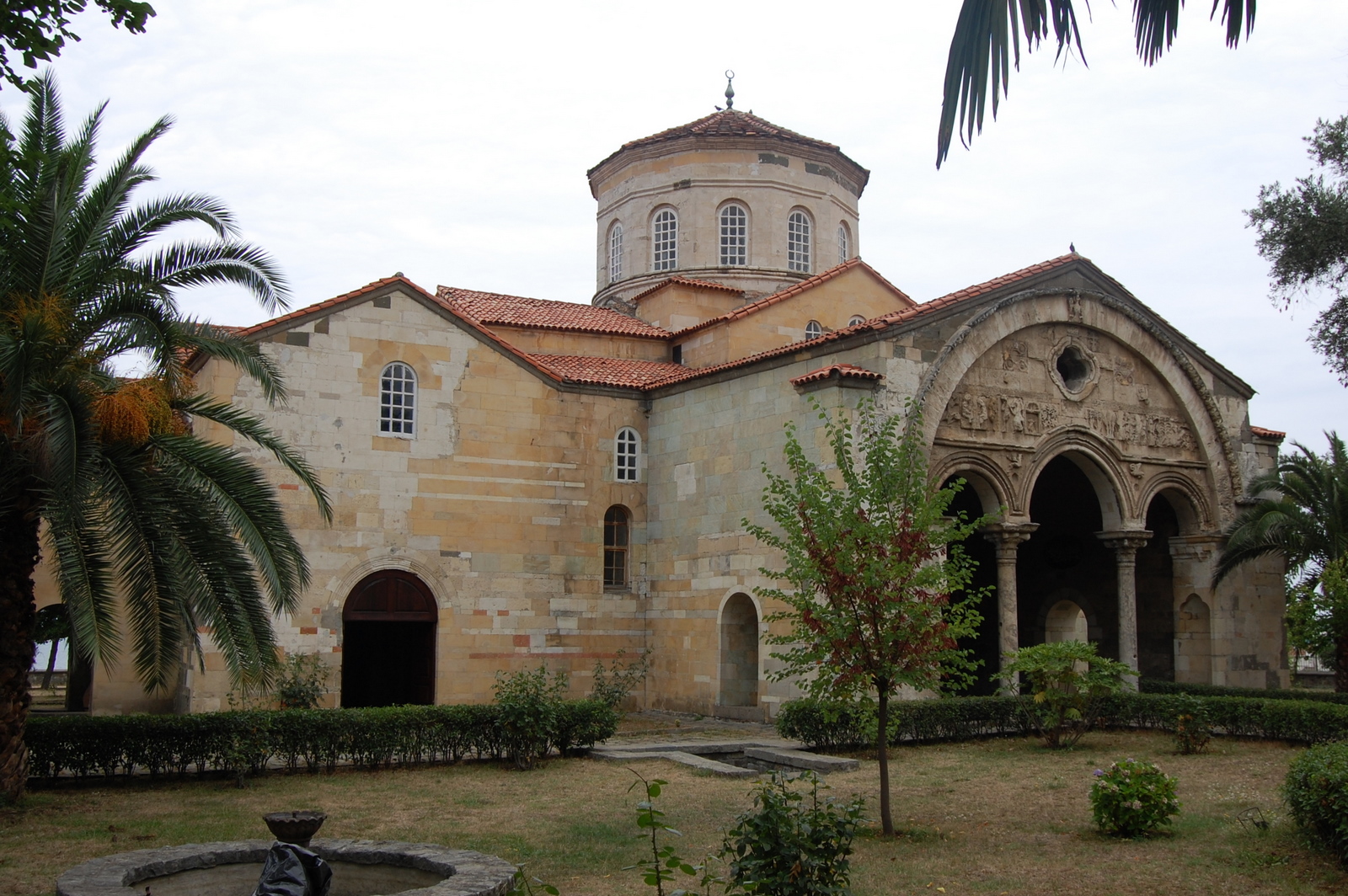
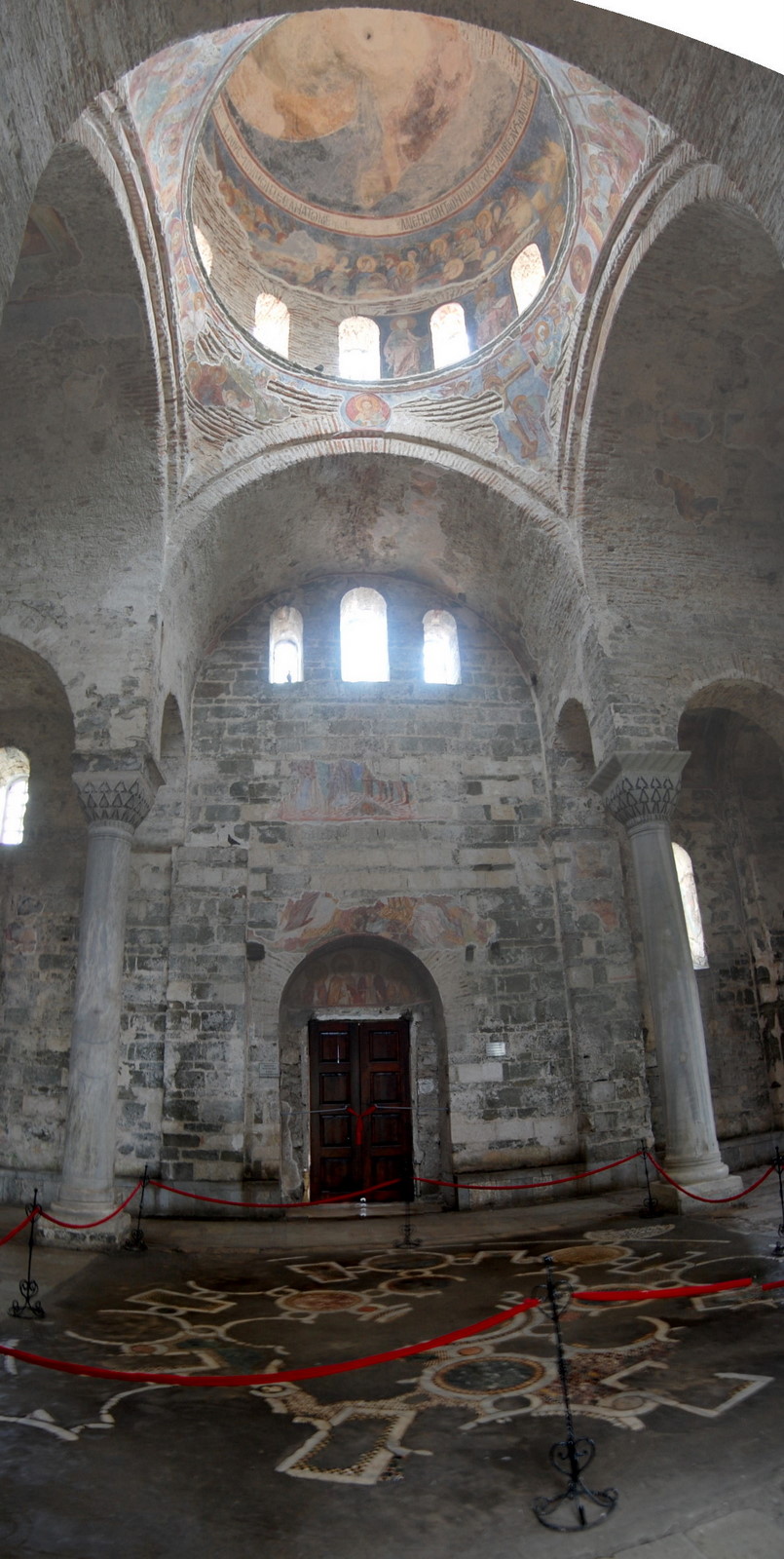 While some feel that this space was
originally modeled on its much earlier and larger namesake
in Constantinople, this is a much different church, roughly
in the rectangular shape of a Roman basilica.
While some feel that this space was
originally modeled on its much earlier and larger namesake
in Constantinople, this is a much different church, roughly
in the rectangular shape of a Roman basilica.|
Click here to see many more
Trabzon Pictures from
this trip
|
Geek and Legal Stuff Please allow JavaScript to enable word definitions. This page has been tested in Internet Explorer 7.0 and Firefox 3.0. Created on September 15, 2008 |
 |